
The Chatterley Whitfield Colliery in Staffordshire was built in the C19 & 20 and is Grade II*-listed and a Scheduled Monument.
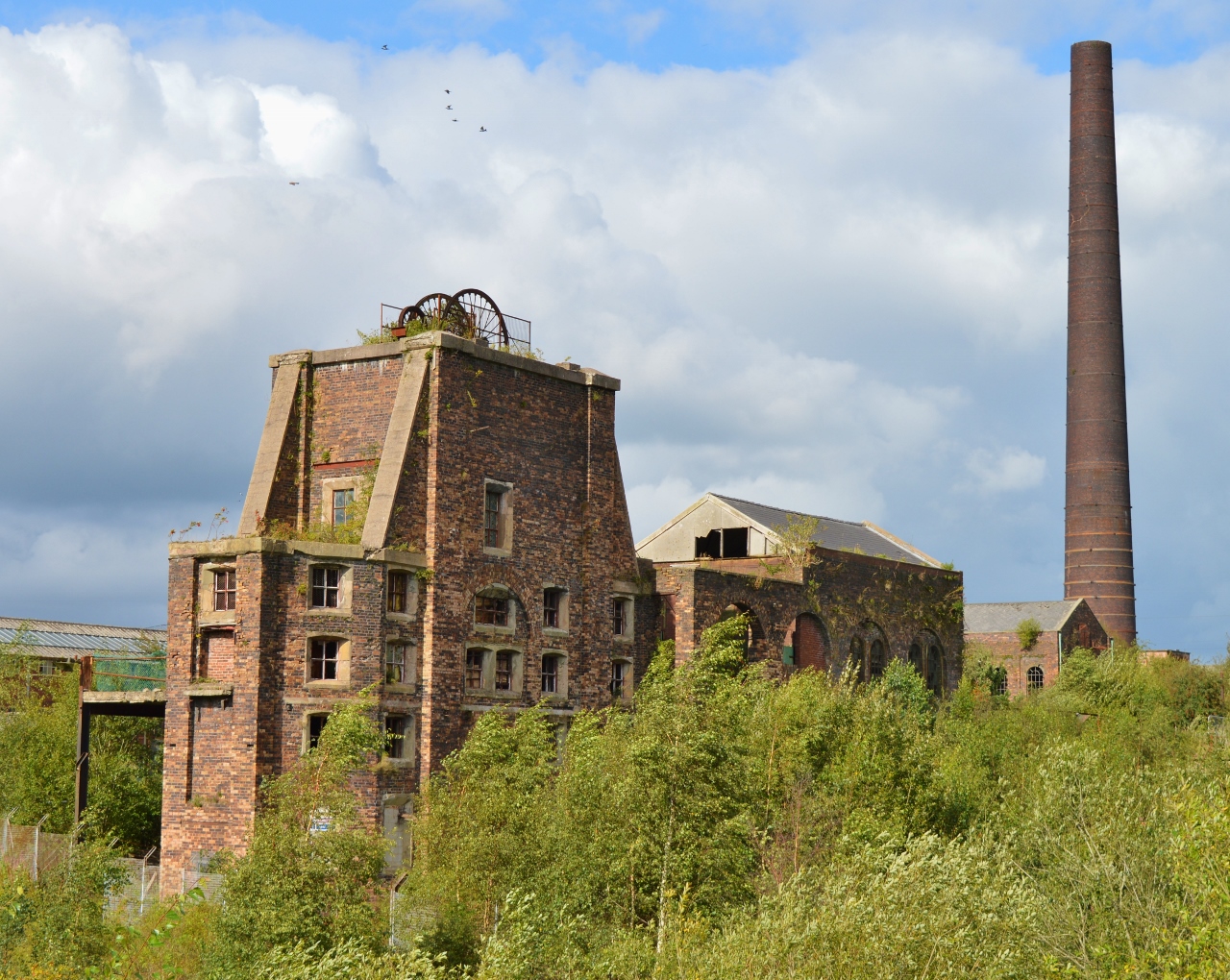
Photo: Ian Tatlock for The Victorian Society.
Grade II*-listed, 1860 onwards, various architects
Chatterley Whitfield Colliery, which primarily dates from the mid-nineteenth to early-twentieth century, is considered to be the most complete example of a deep-level coal mine from the period of peak production in England. It was the first colliery anywhere to produce 1,000,000 tons of saleable coal in a year and played an important role in Britain’s later industrial heritage. The extant structures include the c.1900 Platt Shaft, the c. 1910 Institute Shaft, and the c.1913 Winstanley Heapstead, as well as ancillary structures such as a railway sidings, pumping systems, and storage sheds.
As with all large coal mines in England, Chatterley Whitfield was nationalised in 1947, and operated under British Coal until the 1980s, when with the downturn in demand for coal the mine was closed. The standard mine closure procedure typically involves sealing the shaft and filling it with concrete, but an exception was made on the understanding that the buildings would be used as a museum and an underground tour would help to attract visitors. The whole colliery site is now vacant, the buildings have been allowed to deteriorate, and a substantial grant will be needed if they are to be rescued.
Christopher Costelloe, Director of the The Victorian Society, said: ‘The Industrial Revolution has left few more evocative sites than Chatterley Whitfield. Someone needs to think big here- King Coal was at the heart of our prosperity for centuries, and this complex is far too important to be lost.’
Status Update / March 2026
A plan to redevelop the colliery as the Black to Green Eco Park was unveiled in 2025 at the Real Estate and Infrastructure Forum in Leeds. The site will include several data centres, as well as a photovoltaic solar farm, a battery storage facility, and a combined heat and power plant making use of the mine’s latent geothermal energy. Primarily funded by the National Grid, the repairs to the listed buildings are supported by grant funding from central government and the National Lottery Heritage Fund.